I presented my project in class and it went very well and I got a great response! I had my classmates fill out an anonymous survey that had questions asking if they had ever struggled with mental health, if they have ever been involved in theater, how they have noticed theater helping them, if they feel good after a show, and how they feel about budget cuts. Fourteen people did the survey and only two people in my class said that they had never struggled with mental health! Both of them said that they had been involved in theater or performance, but it only helped one of them. However, they both said that they feel good after they see shows. Their opinions on budget cuts were also split. For the most part, out of everyone else, people were strongly against budget cuts in schools in regards to theater programs. One person said that theater not only helps the performers, but also the people who watch. This person added that their favorite school thing is to watch the shows! Out of those twelve people, they all said that they feel good after they see a show (depending on how good it is). The people that said that theater / performing has helped them said that that was because theater offers an escape and gives you a new way to view others and the world around you. People also said that it has helped them make new friends or provides a time to let loose! I got great responses and am continuing to grow my outreach!
Conclusion!
Through this project, I have learned a lot of new information that I am super thankful for! In my own time doing theater, I also saw how big of an impact theater has on mental health in my own life. Theater has helped me grow in my own confidence, become stronger, cope with the loss of a friend, and make some of the best friends I will ever have.
I also got to interview some very cool and special people!
The point of this entire project was to see if theater really does impact mental health and I have found out that it absolutely does! Through building confidence and creativity to problem solving skills and memorization, nobody had a doubt that the impact was there!
Thank you to everyone who helped me with this project and who has been following along!
Final Interview :)
JP Welliver says that he has been in theater longer that he can remember. He was doing shows as early as elementary school! He has been working with kids since high school through different sides of theater such as kids for kids productions and a as a music teacher with his church’s summer bible school program over the years. All in all, it’s been a little over 12 years (give or take a few years). In regards to seeing a person’s morale be changed by doing a show or going to rehearsal, JP says that that is something that he has gotten to experience many times, which he says is an overwhelming emotion (in a very good way) for him to see. Being able to witness the children with all of their friends and having huge smiles on their faces from ear to ear–it is something that gives the soul true joy like nothing else in this world can, he says.
I then asked if he thinks that theater helps or hurts mental health and he said he thinks the theater can be a bit of both. He thinks the positive impacts are tremendous for individuals who participate and the theater gives you a place to be yourself, free of judgment and surrounded by love and support from people of all walks of life. It is truly incredible. JP said it helps individuals to focus on something specific and work hard for a common goal–to bring entertainment to the masses of the surrounding community. JP also said that theater can affect mental health. An intense rehearsal schedule can cause you to become stressed out because of the large time commitment that sometimes allows little time for downtime or moments to do other entities that you are passionate about. The audition process is also something that can make you crazy. Working hard to get the part that you really want–practicing for hours on end trying to perfect everything–it can make you crazy, especially if you do not get the part, he says.
In addition to that, JP said the theater has positively impacted him since the day he stepped through the door. He said 9 years ago, he walked through the doors of the EPAC at a time when he was going through some very difficult personal struggles. He even said that for his very first audition, which was a mainstage production of Willy Wonka, he almost got back in his car and drove home because he was too nervous to have the courage to just do it. But luckily he found that courage and now he says that even though it sounds cliche, walking through those doors changed his life and acted as a safe haven where he could be himself without any type of judgment. And, 9 years later, he is able to call this theater a second home. When I asked JP what makes him passionate about theater, he said that there is nothing like putting on a costume, pretending to be someone else, getting under the lights, and working your butt off to make a LIVE audience in the comfort of their seats smile at what they are watching. He says It is so fun to play characters of all shapes and sizes and he loves being able to make people smile and the true passion comes from his heart when he sees the energy from fellow actors on the stage and the energy from the audience in front of him. He says there is no way to describe it in words because it is something you have to experience.
In response to me asking if he has ever worked with a child in a show who truly inspired him, he said that he has worked with so many kids over the years and it’s hard to single out one individual. He said that they are all truly inspiring. No matter their back story or their struggle, they all end up having a special place in his heart. Their energy, smiles, passion, and love bring out the best in JP, he says, adding that they are the true beacons of light that can make positive change in this world and he couldn’t be more excited to see how those that he has worked with over the years accomplish that as they continue to grow and mature throughout the stages of their lives.
At the end of the interview, JP adds that the theater is a special community to be a part of. The arts are an integral part of this community, this world–and they are vital in the development of our kids. It teaches discipline, it embodies a world of non-judgment, passion, and love. JP says that he has been blessed and lucky to have many opportunities throughout life thus far to be in the theater community and he looks forward to how it evolves in the coming years.
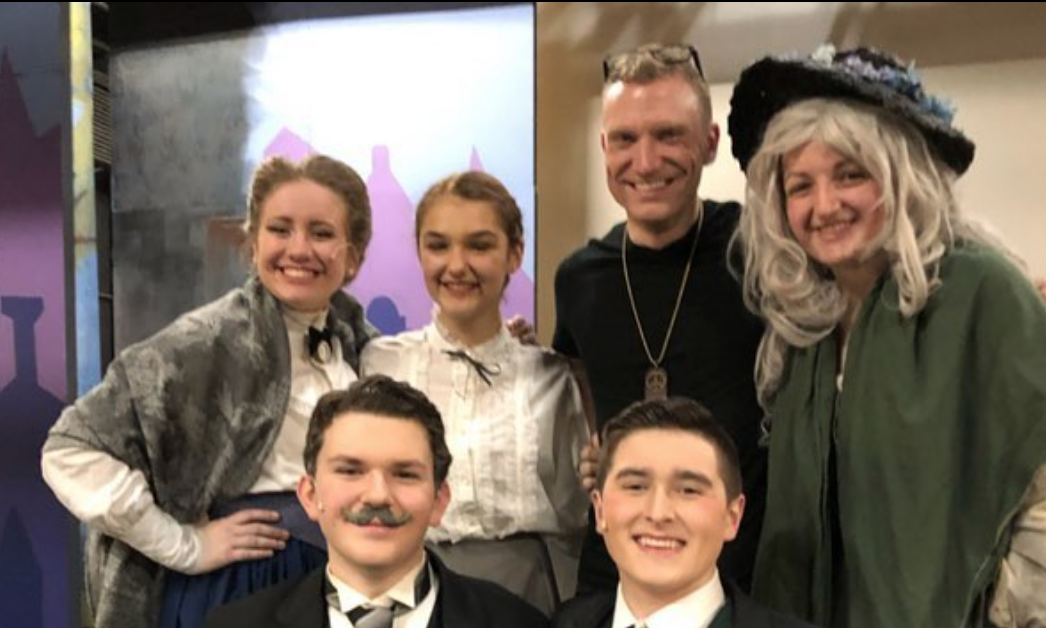
Youth directors!
The next two people that I interviewed were Irving Gonzalez and Courtney Clarke. Irving is a graduate of The American Musical and Dramatic Academy in New York City. While in New York, he was able to study under professors from Juilliard and The New York City Opera Company. Following graduation, he went on to perform in regional national tours. Upon his return to PA, Irving began directing and choreographing middle/high school musicals. This led him to take over the Ephrata Performing Arts Center’s Kids4Kids Youth Productions series, which he said encompassed The Center Stage Theatre Camp, EPAC’s Got Talent, Musical Junior Productions and the Young Artist Cabaret Series. I asked Irving what made him want to run the Kids4Kids program and he said About seven years ago, Edward R Fernandez, Artistic Director of EPAC, asked if he would direct a JR production of Beauty and the Beast. In that production they had over 65 kids. At that point, Irving said they knew they were on to something and recognized that there should be more opportunities for young performers. This was the beginning of the Kids4Kids series. Irving currently oversee Ephrata High School’s Theater Program. Courtney also has a strong background, as she has worked with children in some form (school teacher, babysitter, nanny, coach, etc) for over 17 years. Courtney also runs a theater camp for kids and when I asked her what her camp did for the kids, she said it builds confidence and that right now they are running a musical theatre camp and a straight play camp where the kids learn blocking, character creation, working together, vocals and choreography. Courtney wanted to start the program because she says she has always believed in the power of theatre and has also always wanted to be her own boss and work with kids and share her passion. This led me into my next question where I asked what made her passionate about theater. She said the way it gives you a voice, how you can be anything you want on stage. Courtney said it is to her, almost a safe space to act out fears or passion or sadness. I also asked Irving what makes him passionate about theater and he said that What makes him passionate is the open dialogue it allows between the student and director. He encourages students to take ownership on how they navigate their process from start to finish and he says we are collaborators and partners as we explore all avenues through the rehearsal process. He added that, of course, to see the final
product is invigorating and melts his heart. Theater is not just a “thing” I do, but it’s a way of life I have engrained to my everyday being, Irving says.
I asked how she has seen kids grow through her program after getting involved with theater and she said she has seen them grow immensely. They use drama as an educational tool and their goal is not necessarily to turn children into actors or actresses, but to allow them a safe space to learn how to handle emotions, and work in a group and share their voice. One of her favorite stories is of a girl who came to them so shy, she wouldn’t even speak to the cafeteria workers to order her lunch, she would pass them a note. After several months of Drama Kids, she verbally ordered her lunch for the first time ever!! Courtney has seen shy kids come out of their shell and seen outgoing kids learn how to share attention. She said she has seen kids “find” themselves and it’ just magical. I asked Irving a similar question about seeing his students be helped by theater and he said he has a saying with his high school students ” We are forever bonded by this experience”. Irving said that that was evident when the environment created was that of authenticity and a safe place to nurture their own personal artistic journey. Irving has had several students who found theatre as a safe haven to be comfortable enough to share their most personal struggles. In fact, they have had several LGBTQ students use theater as a celebratory self identity.
Irving says he is always inspired by the energy, strength, and seeing personal growth from each student and he especially appreciates
those who have allowed themselves to slowly shift from the reserved, and shy performer to a confident and well-rounded performer.
I then asked both of them how they felt about budget cuts in schools and Courtney said that it is extremely detrimental and that it is a proven fact that kids who are exposed to the arts are more compassionate, better problem solvers, and more. Irving said that unfortunately, the arts in school are the first to be cut from the budget. Theater programs are overlooked and labeled as just an “extra” curriculum. Many failed to understand the positive impact the arts have on students not only in school but in their everyday lives. Irving said if we are able to shift the cultural acceptance of the arts in schools, perhaps we may see a shift in responses.
Irving added that in regards to mental health and the impact theater has, theater is a mere vessel of exploration and self discovery. He found that students who perhaps struggle with just to “fit in” found theater to be a sense of solace and inner peace. At EHS Theatre Program, there is no judgement nor a certain cookie shape mold you must fit in. Theater gives every student, even temporary, a remedy for healing and escape.
Thank you so much to Irving and Courtney for the support!

Another Interview!
The next two people that I interviewed were Mollie Divet and Terri Mastrobuono.
Terri worked at the Fulton Theater for 25 years. She was an English major and theater minor. She went to different schools and hosted theater programs for young kids. She also created a children’s theater at Elizabethtown College. Now, at Elizabethtown College, Terri teaches two classes and directs plays.
Mollie worked for four years in Human Services and three and a half years specifically supporting residential adults with severe mental illness. She also studied psychology at Millersville University. I know Mollie from the “Access to Opportunities” after school program, a non-profit in Lancaster that she has been at for one and a half years. Mollie has a great background and spends a lot of time with kids, so I knew that she would be a great resource! I asked her if she has ever seen a child be helped through music and she said that she has seen children getting excited about learning instruments at school, especially a child who learned the violin and that outlet is proving to be very beneficial to him. There is also a student who sing-talks when she is in a good mood!
I asked the same question to Terri about seeing a student be helped by theater and she said absolutely! Terri said that she has seen confidence grow and one time, she did a 10-20 day residence in a middle school in Ephrata, doing workshops and other theater related things. There was a student who Terri was not sure about but only one week in, this student totally flipped a switch and came alive in a class on creativity. This student eventually wrote and published a book and went on a speaking tour!
I also asked Terri about budget cuts in school and she said that that was so misguided. Theater teaches so much and one time at another residency, she taught a lot about storytelling and the next semester, the reading scores all shot up for those students. Critical thinking and reading skills are learned from theater! Terri has even taught math through theater games and says “children learn best from experience” and says that is priceless.
Mollie has also helped people through music by using it as a studying tool and she said that many residents in residential mental health places use music as a coping skill.
Terri told me that she is passionate about theater because of the connection with the audience and characters. Especially when the audience gasps and is silent when they have a realization. She says it is like touching a wave when you’re paddling and then fully catching the wave and you are surfing! Terri has met some profound people and she loves that theater gives you a vacation from your world and gives you relief in another reality. Even just going to theater provides a “time out”. Improv kept her laughing during a divorce and helped her get through everything. Terri ended with talking about how special it is to get a hug from the audience and when they say thank you for making a difference and thank her for the show.
That is so special and I was very lucky to be able to talk to both Terri and Mollie!
My Course
A big part of my project was taking a course called Depression and Anxiety – Treat Anxiety and Lift Depression. This was on a website called Udemy. This course had some very strong and helpful topics. The topics were Anxiety, Depression, Instructor Introduction, Government Cuts, The Idea That Depression is Expensive but Theater Helps, Lady Gaga, Some Information About the Brain and Theater, Different Therapies, Theater vs. Cinema, Under tight skin, and Wrap up / closure. The beginning highlighted the difference between Anxiety and Depression. Then, there was a bit about the instructor and how he came to be an instructor. The instructor says “If you paint, dance, or play a musical instrument or just enjoy going to the theater or to concerts it’s likely that you feel healthier and are less depressed than people who don’t.”
Government cuts were the next topic talked about and it is difficult because there are so many different opinions. The monetary issue could also be looked at in another light, saying that dealing with mental health issues is just as expensive, if not more, than having theater programs available. Through therapy, hospitals, and medicine, the treatments for mental health issues are just as costly as having theater programs that could potentially stop the problem from growing.
The course then went into talking about Lady Gaga. Gaga said that acting helps and actors are prone to Depression because they are always being judged and have no privacy and theater helps people have an escape and gives them a purpose.
The next part of the course talks about the parts of the brain that do and do not get exercise during acting and improv.
Different types of therapies then came up, such as Drama Therapy and Monopoly Therapy. Drama therapy seems interesting because you could share ideas and problems in a creative way and develop self esteem, and you need no prior drama experience! However, I did not understand why Monopoly Therapy was helpful, it seemed like they were just playing the game.
The instructor then talked about live theater versus cinema theater. I learned that people who go to a cinema at least once per month are 62% less likely to report having anxiety and depression! Movies let people see things clearer and experience emotion in a safe space and the end result is that live theater and cinema theater have similar effects. Also, happy movies will make you happy! There is a film called “Under Tight Skin” that talks about how uncomfortable the feeling is when you have anxiety and depression. The film is trying to break the stigma and it is like a film for the voiceless. This director is trying to get the movie represented so that he can raise money!
Finally, the course highlighted some happy movies to watch and ended with the following quote from Socrates: “An unexamined life isn’t worth living”.

Students in Theater
Elise White is a senior in high school and she has been very involved in theater for a long time. I was able to ask Elise some questions about theater and mental health and she gave some very insightful answers! Our interview started with me asking when and why she started performing. She started her 5th grade year with the musical that year because she always was singing and wanted to do it for others to enjoy as well as learn about acting on stage. She thinks theater helps mental health because it is an escape for most to get away from bad situations at home or just the real world in general. It becomes an outlet for many who do it and she has personally experienced the positive impact of theater. She says mental health affects everyone and theatre has allowed her to pour out her feelings in a positive way. In the same sense, some people journal or exercise to relieve all their emotions, but Elise sings and acts. Elise is passionate about theater because she says that when you take on a persona, you experience different things you wouldn’t experience in the real world: different stereotypes the character might be put in to, different situations they have to deal with, or even different emotions you’ve never had before. Theatre allows you to walk in someone else’s shoes, and she believes it makes you more sensitive and understanding about those around you. When asked about budget cuts, she says that they are absolutely unacceptable and that theater and music kids are the ones who have the most dedication and hard-working spirits. She says they are found to be the ones with the best grades and taking away theatre would be almost like taking away someone’s therapy or outlet. Elise added that she believes that theater has shaped some of the most beautiful, understanding people. It creates a family with people you would’ve never known or been friends with and it teaches students how to work hard and practice for something that will turn out beautiful in the end. It teaches real life lessons, and it prepares people for the real world.
I have two quotes from other students that show the benefits of theater. Laine Henry is more often on stage crew and she had some things to say when I asked if she had anything to say in regards to theater and mental health. Laine said “The family that is crew. Especially when you go through tragedy, they are a family. Theater is so entertaining and brings you relationships with so many people. Being in rough mental spots is somewhere I’ve been multiple times and my family and my crew family have always been safe spaces. We are there for each other and understand each other’s feelings and emotions. Not to mention our fantastic dance moves, cooking/baking skills, and insanely hilarious inside jokes. My stage family has kept me sane and quite literally been first responders to tragedy in my life. I treasure them with all of my heart.”
The other student is Riley Tolbert. When she saw the question “How does theater impact mental health?” she said the following : “Hi I was never in theatre myself but I watched one of my best friends recover from an eating disorder she had been battling for years by getting involved. She became a different person in the most beautiful way!! The once insecure and hurting girl became this incredible person who just beamed with happiness. When she was on stage, or just in the practice room with all of her people, she truly came alive for her, theater literally saved her”
First Interviews
Two people that I interviewed are dancers that I have gotten to know. Devon Groff started dancing when she was three years old because her parents put her in it. She also played soccer, but felt a stronger connection to dance. Devon continued with dance because she felt good while she did it. She was shy as a child, except for when she performed. She is comfortable on stage and liked not feeling shy. Now, Devon works at Popovsky Performing Arts Studio and Move It Studio.
I also interviewed Lauren Sangrey, who is a teacher at Warwick High School and Encore Dance Center. Miss Sangrey also started dancing at three years old because she lived in Alabama and her parents wanted her to be involved there.
I asked both of them about seeing someone’s morale change in a rehearsal or show, and about using dance as self expression. Both of them had a very strong response to when I asked if they had seen someone’s morale be changed. Miss Sangrey said that if someone loves to dance, it will truly make them happy. She also said that she was able to watch another class perform the night before I interviewed her and she was amazed by all of the emotion in the dance and that makes it better to watch and more fun to perform. Devon said that she even sees her own morale change after almost every time she teaches, and when she performs. She pointed out that she could feel better when she performs because she can really move and perform. She also pointed out that she can see a change if her sister is stressed out after she dances and she can see her sister be happier. The last thing that Devon pointed out relating to this is that most people are happy after seeing a show, unless the show is sad. I also asked Devon if she finds dance as a way to express themselves and she gave a very confident yes and said that dance is an amazing way to express yourself because sometimes words can get mixed up but you can tell emotions through dance. Miss Sangrey said that she is passionate about theater and dance because of the emotion behind it, that it is a destresser, the physical activity, and that it takes you out of reality. Devon said that she is passionate because it was her major in school, so she obviously loves it. She also said that the passion from others was contagious and she loves how you can create and play in a way that is more than writing and fine art. Finally, dance is a culmination of all art forms because you need sets, composers, lyricists, and so much more.
In my course, I learned about budget cuts for school arts programs and I akked Miss Sangrey about it one day. She said that she really hope that it never happens to us because even if the arts aren’t a career for someone, it should be a part of life. Now that dance is a smaller part of Miss Sangreys life, it is still important because she said that she would be different without it. She added that she wants people who love theater and dance to always keep it in their lives, even if it isn’t performing, but just watching.
At the end, Devon said that she would compel people who haven’t tried to try dance or theater. Just trying it will give a new perspective, even if you don’t like it.
Talking to Miss Sangrey and Devon was very interesting to me and I think that the most common theme is how good they feel after they dance or watch a performance.

A Study of Theater’s Impact on Mental Health

Hi! Thank you for visiting my blog! My goal with starting this blog is to share the message that I have gathered in working on my project; Theater Positively Impacts Mental Health.

I am in a class at my school called Honors Seminar. In this class, along with interesting activities, we get the chance to go in depth on a project of our choice. I chose to work on the theater’s impact on mental health. In my time working on the project, I was lucky enough to interview a lot of interesting people and get their insight on theater. I have been involved with theater since fifth grade (6 years) and every time I do a new show, I gain so much and meet incredible people. I have been lucky enough to have some of the people that I have met share their time to let me interview them! I have interviewed dancers, singers, teachers, mentors, and some of my peers. This project has brought so many new perspectives into my life about the impact that theater has on mental health and I hope that this blog can do the same for everyone else.
 How theater impacts mental health